
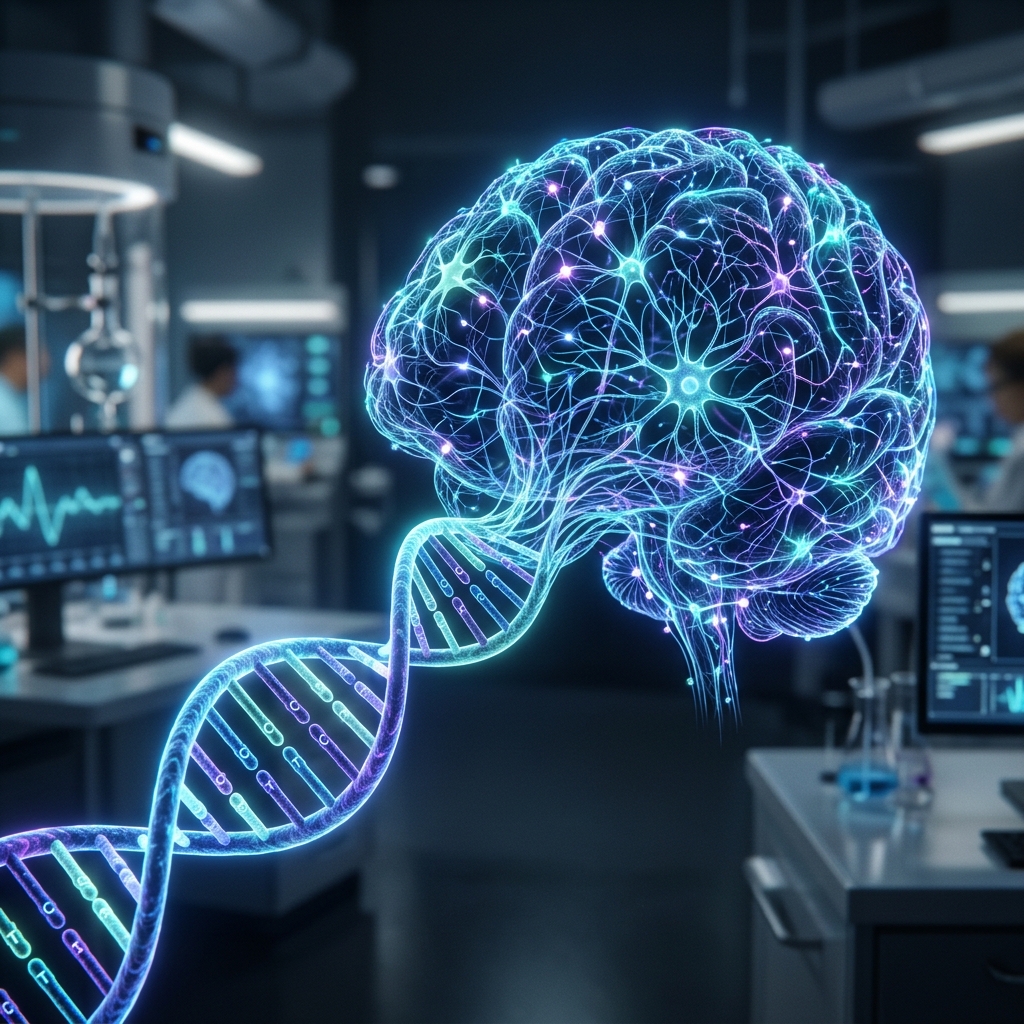
For decades, finding the right mental health treatment often felt like a series of educated guesses. A patient might try three different medications over six months before finding one that provided relief without significant side effects. This “trial-and-error” model was the clinical standard, not because providers didn’t care, but because the biological tools to differentiate the unique needs of every individual simply weren’t high-resolution enough.
As we move into the second quarter of 2026, those tools have finally arrived. The era of Precision Psychiatry is no longer a distant theoretical goal—it is the modern reality of evidence-based care.
Moving Beyond the “Average Patient”
The core premise of precision medicine is simple: there is no such thing as an “average” patient. Each of us carries a complex interplay of genetics, biology, environment, and lifestyle. According to a landmark study published in Nature (Grotzinger et al., 2026), researchers have now successfully mapped the genetic landscape across 14 major psychiatric disorders with unprecedented clarity.
This mapping has identified specific “genetic hubs” that explain why conditions like ADHD and anxiety often travel together, while also revealing the unique markers that distinguish Schizophrenia from Bipolar Disorder at a biological level. For patients, this means we can move toward mechanism-based care, targeting the actual biological pathway causing the symptoms rather than just the symptoms themselves.
The Rise of Functional Biomarkers in 2026
While DNA remains a critical piece of the puzzle, 2026 has seen a massive leap in functional biomarkers. As highlighted by Kas et al. (2026), innovation has shifted toward “fluid” (blood-based) and “functional” (neuroimaging) indicators that can pinpoint specific neurobiological malfunctions before a single dose of medication is even prescribed.
Imagine a blood test that doesn’t just check your cholesterol, but checks the inflammatory markers in your neural pathways. This is the new reality of Immune-Driven Depression. Recent research found that up to 30% of patients diagnosed with Major Depressive Disorder (MDD) actually suffer from a subtype where inflammation is the primary driver (Wessa et al., 2026). Traditional serotonin-focused treatments may not be the most effective answer for these individuals; instead, a personalized approach integrating anti-inflammatory strategies alongside traditional care proves far more effective.
What This Means for Your Next Appointment
If “Precision Psychiatry” sounds like science fiction, it’s actually quite practical. In a 2026 clinical setting, a precision-focused appointment might involve:
- Deep Phenotyping: A more detailed look at your lifestyle, environment, and history than ever before—what experts call “Clinical Precision” (Amad et al., 2026).
- Pharmacogenomic Insights: Using your genetic profile to determine which medications your body will metabolize most effectively and which ones carry a high risk of side effects.
- Measurable Progress: Using objective biomarkers to track how your brain is responding to treatment in real-time, allowing for rapid adjustments rather than months of waiting.
The Oasis Perspective: Holistic Precision
At Oasis Health Services, we believe that precision tools are only as effective as the compassion behind them. While we embrace the data—the “genetic map” and the “fluid biomarkers”, we integrate them into a holistic, person-centered framework.
We don’t see a “diagnosis” as a label; we see it as a mechanical insight that helps us build a more effective path to your wellness. By combining the 2026 breakthroughs in Pharmacogenomics and Precision Psychiatry with our commitment to whole-person care, we ensure that you are never treated as an “average patient.” You are a unique individual, and your treatment plan should reflect that.
References
- Grotzinger AD, et al. (2026). “Mapping the genetic landscape across 14 psychiatric disorders.” Nature. DOI: 10.1038/s41586-025-09820-3
- Kas MJH, et al. (2026). “Biomarker innovations in precision psychiatry diagnostics and treatment strategies.” Eur Neuropsychopharmacol. DOI: 10.1016/j.euroneuro.2026.112762
- Wessa C, et al. (2026). “Current evidence on immune-driven depression.” Curr Opin Psychiatry. DOI: 10.1097/YCO.0000000000001047
- Amad A, et al. (2026). “No precision psychiatry without clinical precision.” Mol Psychiatry. DOI: 10.1038/s41380-025-03363-9