
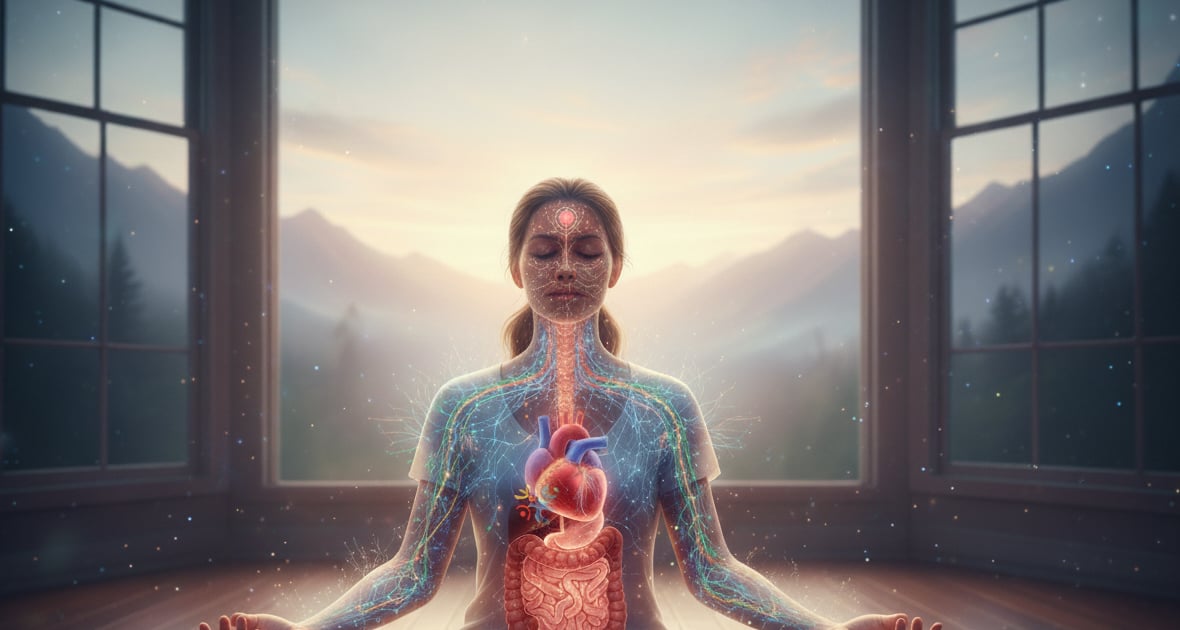
Anxiety doesn’t just live in your thoughts. It shows up in your chest, your stomach, your breath. For many people, the physical symptoms of anxiety are more distressing than the mental ones—and they can feel completely out of control.
Common Physical Symptoms of Anxiety
- Racing heart or palpitations
- Shortness of breath or feeling like you can’t get enough air
- Chest tightness or pain
- Nausea or stomach discomfort
- Dizziness or lightheadedness
- Muscle tension, especially in the neck and shoulders
- Sweating or chills
- Trembling or shaking
These symptoms aren’t “all in your head.” They’re real, physical responses triggered by your nervous system.
The Mind-Body Loop
Here’s what happens:
- Your brain perceives a threat (real or imagined)
- Your nervous system activates the fight-or-flight response
- Your body prepares for danger by increasing heart rate, tensing muscles, and redirecting blood flow
- You notice these physical sensations and interpret them as dangerous
- This creates more anxiety, which triggers more physical symptoms
This creates a feedback loop where physical symptoms fuel mental anxiety, and mental anxiety creates more physical symptoms.
Why Physical Symptoms Can Feel Scary
When your heart races or your chest feels tight, it’s natural to worry something is seriously wrong. Many people with anxiety end up in the ER thinking they’re having a heart attack, only to be told it’s “just anxiety.”
But here’s the thing: even though these symptoms aren’t dangerous, they’re still real and distressing. Dismissing them as “just anxiety” doesn’t help you feel better.
Breaking the Cycle
1. Recognize the Pattern
Understanding that physical symptoms are part of anxiety—not a sign of danger—can reduce the fear response.
2. Practice Grounding Techniques
- Deep breathing (especially extending the exhale)
- Progressive muscle relaxation
- 5-4-3-2-1 sensory grounding
- Cold water on your face or wrists
3. Move Your Body
Physical activity helps discharge the stress hormones that build up during anxiety. Even a short walk can help.
4. Work with a Professional
Therapy (especially CBT or somatic approaches) and medication can address both the mental and physical aspects of anxiety.
The Bottom Line
Physical symptoms of anxiety are real, valid, and treatable. You’re not making them up, and you’re not weak for experiencing them. With the right support, you can learn to calm your nervous system and break the mind-body anxiety loop.
If anxiety is affecting your daily life, reach out for help. Treatment works, and you don’t have to manage this alone.