
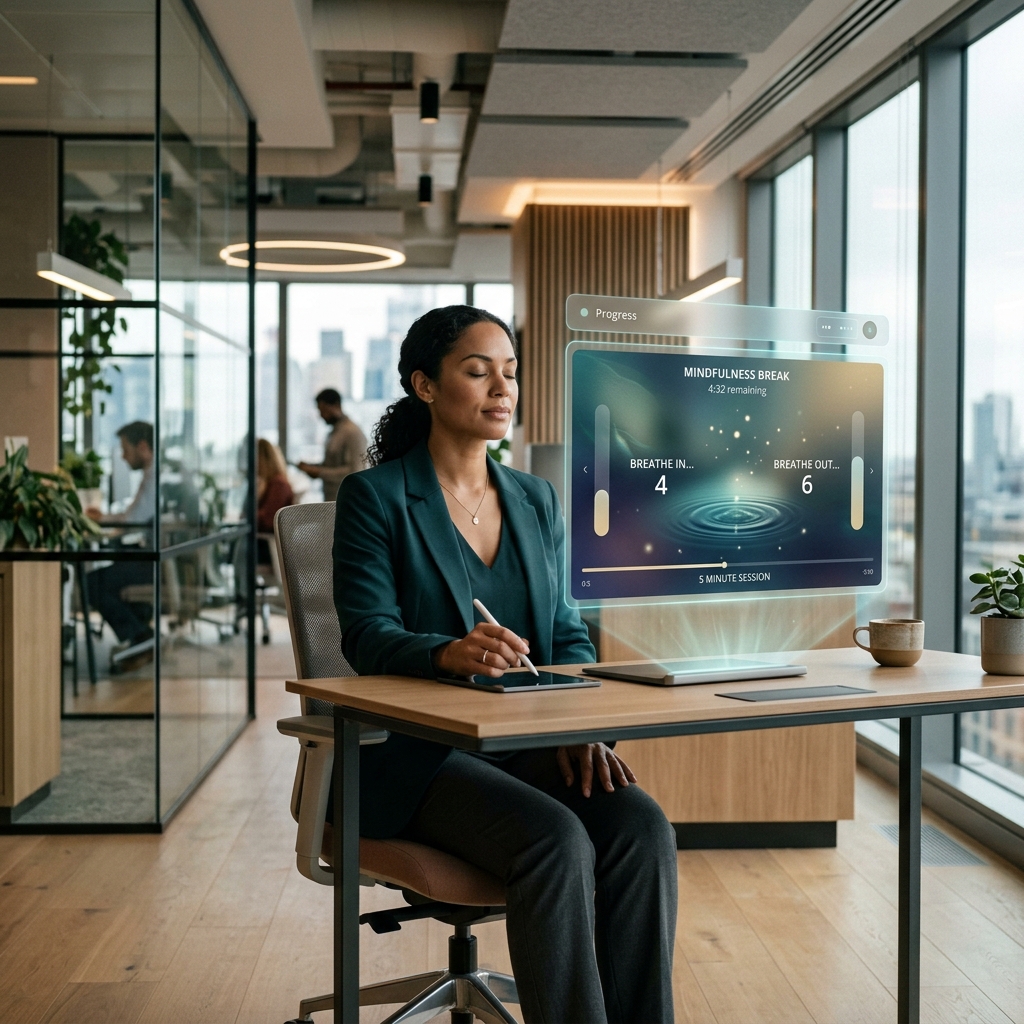
For years, “workplace wellness” was often synonymous with a discounted gym membership or a bowl of fruit in the breakroom. While well-intentioned, these reactive perks did little to move the needle on the true crisis of modern labor: chronic workplace stress and the resulting clinical burnout.
As we navigate the workplace of 2026, the paradigm has shifted. Leading organizations no longer view mental health support as an optional benefit—they view it as strategic infrastructure, as critical to operations as cybersecurity or financial auditing.
The Science of the “Micro-Practice”
The biggest breakthrough in 2026 isn’t a new medication, but a shift in dosage. We’ve moved from the idea of hour-long meditation sessions to the high-impact micro-practice.
A randomized clinical trial published in JAMA Network Open (2025) provided rigorous evidence for this approach. In a trial of nearly 1,500 employees at a large academic medical center, researchers found that a brief (about 10 minutes) daily digital mindfulness practice produced a large reduction in perceived stress—sustained at four-month follow-up—alongside improvements in job strain, burnout, and symptoms of depression and anxiety.
The key theme? Engagement. In the JAMA trial, employees who practiced more consistently tended to see somewhat greater stress reduction than those who used the app only lightly. A separate randomized trial in Australian public-sector workers found a related pattern: benefits tracked with how much people actually engaged, and were clearest when app use was paired with live, supported sessions rather than the app on its own. The throughline is honest and important—simply making an app available does little; the practice has to be genuinely used.
2026: The Year of the “Wellness Nudge”
What makes 2026 different is how these tools are integrated. We’re moving away from fragmented apps that employees have to remember to open, toward what might be called Integrated Mental Health Ecosystems.
These systems use AI-driven “wellness nudges” that are integrated directly into digital workflows (Slack, Microsoft Teams, etc.). For example, if an AI-powered workload monitor detects a pattern of back-to-back meetings and high-intensity cognitive load, it might provide a real-time nudge: “It looks like you’ve had a heavy morning. Take 3 minutes for a grounded breathing exercise before your next call.”
This is proactive support—intervening at the moment of stress rather than waiting for the employee to reach out for help after the damage is done.
From Awareness to “Mental Fitness”
The industry language has evolved from “Mental Health Awareness” to “Mental Fitness.” Just as we go to the gym to build physical strength, employees are now building “psychological capital”, resilience, emotional regulation, and stress management skills, through daily digital practice.
This shift aligns with the growing “Right to Disconnect” movement—now enshrined in law in countries such as France and Australia—which pushes companies to be explicit about workload design, ensuring that digital tools are used to facilitate recovery, not just productivity.
The Oasis Perspective: Integrated Resilience
At Oasis Health Services, we advocate for a workplace where mental health is built into the foundation of the day. We believe that Digital Mindfulness Tools are powerful equalizers, they provide scalable, evidence-based support to everyone, regardless of their location or schedule.
However, we also know that tools are only as good as the culture they live in. A mindfulness app cannot “fix” a toxic environment or an unsustainable workload. We work with individuals and organizations to ensure that these digital breakthroughs are supported by compassionate leadership and a commitment to genuine well-being.
Building “Mental Fitness” in 2026 is about more than just reducing stress; it’s about creating a workplace where human beings can truly thrive.
References
- Radin RM, et al. (2025). “Digital Meditation to Target Employee Stress: A Randomized Clinical Trial.” JAMA Network Open, 8(1):e2454435. doi:10.1001/jamanetworkopen.2024.54435
- Bartlett L, et al. (2022). “Effects of a Mindfulness App on Employee Stress in an Australian Public Sector Workforce: Randomized Controlled Trial.” JMIR mHealth and uHealth, 10(2):e30272. doi:10.2196/30272